
- Blends Western RMT with traditional Asian medical systems.
- Emphasizes body, breath, and mind connection.
- Unique success treating complex neurological conditions.
- Detailed assessment to uncover root causes.
This summary is for informational purposes only and may not be accurate.
Downtown Victoria Massage Therapy
208 - 612 View St., Victoria, BC, V8W 1J5
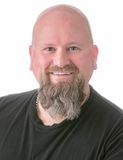
**Curtis Nadj, RMT**, treats a wide spectrum of massage conditions, ranging from general relaxation, to postural assessment and correction, to complex neurological conditions and orthopedic injuries. Having also trained in traditional Chinese, Japanese, and Thai medical systems in addition to his western healthcare and massage education, he brings many aspects of those experiences into his clinical thinking and practice. Curtis commonly treats postural imbalances, post-activity soreness and overuse injuries, low back pain, and upper and lower limb pain and dysfunction. Specific conditions that Curtis has treated recently are: * Post-surgical treatment for scars from a complicated cancer removal * Thoracic outlet compression creating numbness and upper limb dysfunction * Neck, back, leg, and shoulder pain due to postural imbalance and acute injury * Neuro-somatic effects of anxiety, chronic pain, and injury * Nervous and physical tremor management for Parkinson’s Disease * Muscular and joint imbalances during and after pregnancy Curtis’ rich and varied life experience gives him valuable insight into the function of the human body. He has been a soldier, an office worker, a teacher, a diver, a team athlete (hockey and rugby), and a martial artist, and has not only learned from those experiences, but has learned how to integrate and apply them for the therapeutic and orthopedic benefit of his patients. On a daily basis Curtis teaches and practices a variety of traditional Asian health, exercise, and meditative methods, including martial arts like Taijiquan, Baguazhang, and Xinyiliuhequan, preventative, therapeutic, and exercise forms of Qigong and Ruessi-Datton, and static and moving meditation, and he has worked hard to be accepted by and train with some of the world’s top masters and teachers in these skills. He believes strongly in the profound connection between body, breath, and mind, and the importance of integrating these three aspects of our existence in daily life and in therapy. The ability to combine knowledge of traditional Chinese, Japanese, and Thai medical systems with the scientific clinical thinking of an RMT makes Curtis a relatively unique practitioner. As part of recent research, he was able to use these combined approaches to achieve rare and measured success in facilitating short-term relief from the tremors of Parkinson’s Disease. In clinical practice, Curtis uses a variety of muscular assessment and manipulation methods. He supplements these with breathing and relaxation exercises, and active or passive muscular and myofascial stretches. His treatments may include techniques such as: * A detailed interview and assessment to determine root causes of patient problems * Deep tissue massage * Trigger point therapy * Joint mobilizations * Assisted stretching and directed movement and breathing * Cranio-sacral techniques After completing a degree in History, Classics and the Humanities at one of Canada’s top universities, Curtis spent 16 years studying, training, and working in Asia before he returned to Canada to become a graduate and valedictorian of Victoria’s West Coast College of Massage Therapy. Curtis’ personal history, the challenges of the West Coast College program, interactions with patients, and his own interest in education and problem-solving combine to create a desire to be a lifelong learner. Put simply: Curtis is glad to be part of the DVMTC team. He loves his work, and looks forward to finding treatment solutions and facilitating wellness for his patients. **In His Own Words** “I believe that in life we should do good work that helps others. To that end, I’ve been a soldier, a teacher, and now a massage therapist. One of my goals is to earn my living doing work I can believe in. As a therapist and teacher, one of my deepest rewards is in seeing people optimize the operation of their bodies, minds, and health.” “Time spent on assessment is never wasted. Through good and detailed communication between patient and therapist, we often find causes of injury or pain that we might not otherwise have discovered, or sometimes even have considered, had we not taken the opportunity to look deeper. For myself, assessment is part of the fun of this profession, because we have to put our minds to work like a detective, even for the seemingly simple cases, to optimize treatment results and effects. It also gives us measurable baselines and benchmarks by which to experience and demonstrate progress.”
Regular maintenance or followup treatment for multiple issues.